
Anatolia ala carte

Arrive in Istanbul where sea light stone and history converge and meet your lead guide and resident historian at the hotel
A quiet orientation introduces Istanbul as a living archive shaped by water trade belief and empire
As evening falls enter :
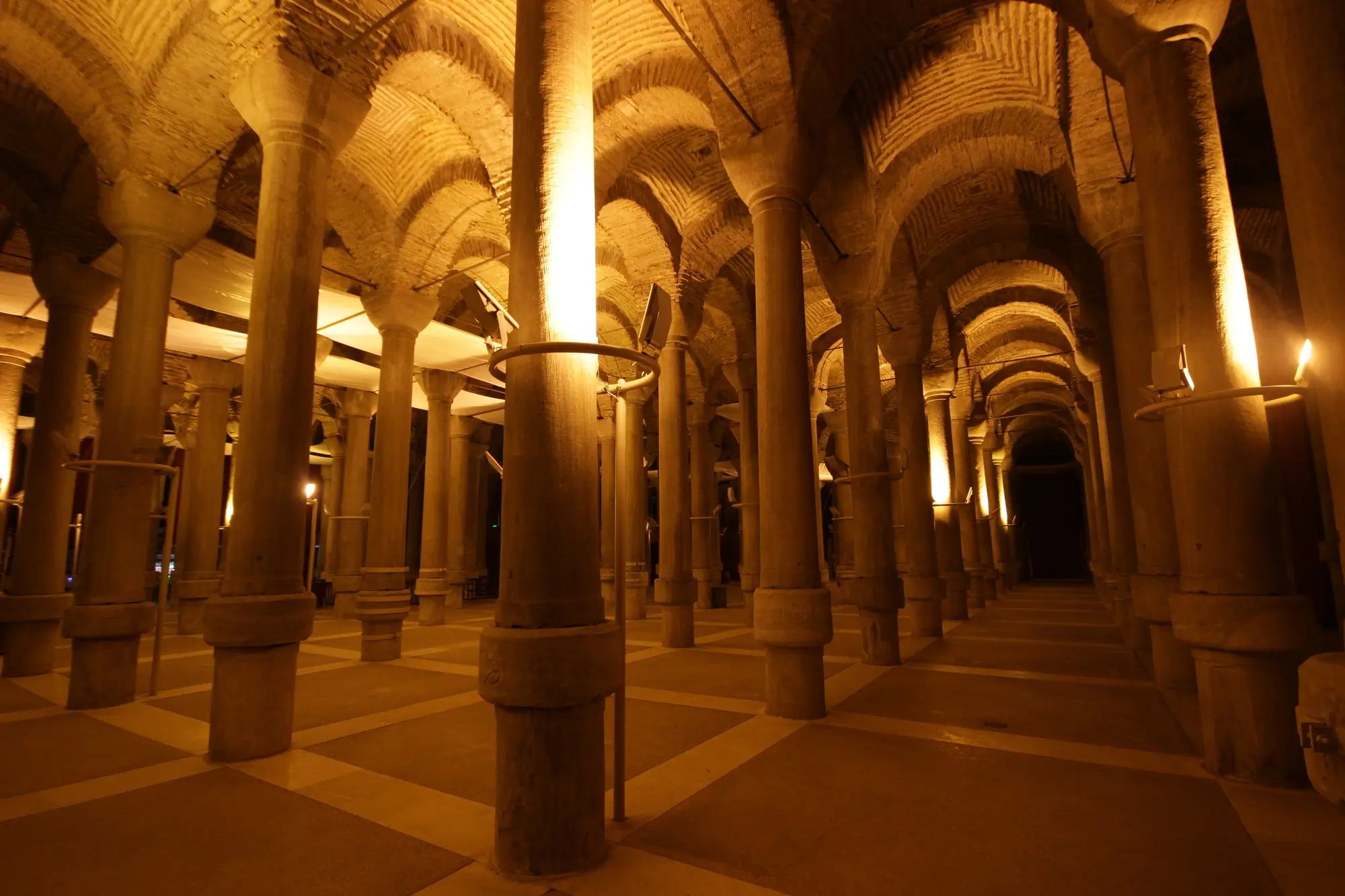
VIP Private Dinner in Binbirdirek Cistern where we will honor to the quiet legacy of Saint Peter whose humility turned faith upside down
The inverted cross observed in Binbirdirek is traditionally associated with Saint Peter one of the principal apostles of Jesus
Early Christian sources describe that when Peter was condemned to crucifixion he requested to be crucified upside down believing himself unworthy to die in the same manner as Christ after having denied him
For this reason the inverted cross became known as the Cross of Saint Peter and symbolized humility repentance and devotion rather than opposition
Within a Byzantine context such symbolism reflects the theological language of the period where belief was often expressed through subtle architectural and visual references
The evening begins with a discreet arrival in Sultanahmet where the ancient streets are calm and softly illuminated
Guests are welcomed personally by the President of Binbirdirek Cistern whose presence immediately sets the tone for an exceptional cultural encounter
Before descending he offers a short private briefing introducing the history significance and spirit of the cistern speaking not as a host alone but as a guardian of this extraordinary space
The group then descends together the stone staircase slowly leaving the modern city behind
Inside the cistern the lighting is carefully designed warm and golden rising gently from the floor to reveal the rhythm of the 224 marble columns
Shadows move softly across the stone creating a sense of depth and quiet drama
The atmosphere feels intimate timeless and deeply evocative
Accompanied by the President the guests take a short private walk through the cistern
He points out architectural details explains the unique structure of the columns and shares stories that connect the space to the life of ancient Constantinople
There is no rush only a calm unhurried exploration suited to curious and culturally minded travelers
As the walk concludes the dinner setting appears at the heart of the cistern
Tables are placed between the columns dressed in elegant linens and subtle candlelike light
The setting feels both grand and personal as if the cistern itself has been prepared especially for this evening
The President joins the guests at the table transforming the dinner into a shared experience rather than a formal event
Conversation flows naturally between history culture travel and discovery reflecting the spirit of National Geographic Signature journeys
The menu is curated with care refined Turkish cuisine inspired by regional heritage presented with contemporary elegance
During the dinner the experience deepens beyond a shared meal and becomes a living cultural dialogue. Alongside the presence of the President of Binbirdirek our own dedicated lecturer joins the table contributing scholarly insight into the Byzantine era when the cistern was first conceived and built
The President speaks with authority and personal passion offering a guardians perspective on the cistern its restoration its contemporary role and its responsibility as a living monument within modern Istanbul
He shares stories of how the space has evolved over centuries how it survived earthquakes political shifts and urban change and how its spirit has been carefully preserved
At the same time our lecturer gently weaves in historical context explaining life in Byzantine Constantinople the water systems that sustained the imperial city and the social and political importance of such cisterns beneath the palace districts. Through his narration guests gain an understanding of how water architecture reflected power foresight and engineering mastery during the Byzantine period. And he will continue The inverted cross observed in Binbirdirek is traditionally associated with Saint Peter one of the principal apostles of Jesus
Early Christian sources describe that when Peter was condemned to crucifixion he requested to be crucified upside down believing himself unworthy to die in the same manner as Christ after having denied him
For this reason the inverted cross became known as the Cross of Saint Peter and symbolized humility repentance and devotion rather than opposition
Within a Byzantine context such symbolism reflects the theological language of the period where belief was often expressed through subtle architectural and visual references
The two voices complement each other one rooted in stewardship and lived experience the other in historical scholarship
Together they create a layered narrative that feels intimate conversational and deeply enriching rather than academic.
When the evening draws to a close the President accompanies the guests back toward the staircase.
They ascend slowly returning to the night air of Istanbul carrying with them the rare feeling of having been welcomed not just into a monument but into its story.
As you return to your hotel this evening we hope the quiet beauty of Binbirdirek stays with you
May the stories shared beneath the ancient columns gently accompany you into the night
Rather than an ending let this moment be a beginning
A soft light guiding the days ahead and opening the door to the discoveries still waiting for you
We wish you a peaceful night and a restful pause before tomorrow reveals the next chapter of our journey together
Day 2 Saturday Istanbul empire faith and public life
Imperial Constantinople Waterways and the Bosphorus**
The day begins in the historic heart of Istanbul where layers of empire remain visible within a single landscape
Walking through the Hippodrome precinct the scholar reconstructs the vanished ceremonial arena that once defined imperial life
Here chariot races public ceremonies and political rivalries unfolded before vast crowds
Although the structure itself has disappeared its monuments and spatial memory still reveal how power was displayed and tested in public space
The journey then moves beneath the city into one of its most remarkable engineering achievements
Descending into an underground cistern the atmosphere cools and sound softens
Columns recycled from earlier monuments rise from shadow as the historian explains how water infrastructure was not merely functional but symbolic
These hidden systems sustained the imperial capital while remaining invisible reinforcing the idea of control order and foresight
From darkness the group returns to light for a private visit to Hagia Sophia Museum exclusively arranged for the group
Entering without public crowds allows time and space for reflection
The historian traces Hagia Sophia not as a single monument but as a living record of changing belief and authority
Built as the spiritual heart of Byzantine Constantinople its dome light and scale transformed architecture into theology
Later Ottoman additions introduced calligraphy minarets and new ritual meanings without erasing what came before
Standing beneath the dome guests experience how mosaics stone inscriptions and spatial grandeur speak across centuries
A rare moment to encounter one of the worlds most influential buildings in quiet contemplation
Leaving the historic peninsula the narrative shifts from land to water
The group proceeds to Pierre Loti Port where they board the Sultan Gondol
Gliding gently along the Golden Horn the journey echoes the waterways that once connected palaces workshops synagogues churches and markets
This passage offers a different perspective on the city one shaped by trade daily life and coexistence
The gondol arrives in Balat where lunch is hosted at Josephine Restaurant in the garden of Rixos Hotel Tersane
Surrounded by restored dockyards and historic architecture guests enjoy a relaxed refined meal in a setting that reflects Istanbuls maritime past and contemporary renewal
After lunch a private yacht awaits
From the Golden Horn the vessel enters the Bosphorus tracing the boundary between Europe and Asia
Along the European shore palaces embassies and waterfront mansions reveal the grandeur of Ottoman diplomacy and imperial leisure
Crossing toward the Asian side the shoreline becomes greener more residential reflecting a quieter rhythm of life
Throughout the Bosphorus cruise and again during the evening dinner at Sumahan by Vakko the historian lecturer adds an emotional and human layer to the journey
Rather than focusing only on architecture the narration turns toward the lives once lived along these shores
As the yacht passes the waterfront mansions the lecturer shares the stories of the old Bosphorus families who once inhabited these yalıs
Families whose lives were shaped by diplomacy trade exile love and loss
Some rose to great prominence others faded quietly as empires changed borders shifted and fortunes dissolved
These are often stories of refinement and melancholy
Of households where multiple generations lived by the rhythm of the water
Where seasons were marked by boats rather than roads
And where sudden political change could mean the loss of property identity or homeland
The guide interprets how the Bosphorus has always functioned not as a divide but as a connective artery linking cultures continents and histories
The yacht docks in Karaköy where guests disembark and transfer to their hotel
Check in and time to rest allow the impressions of the day to settle
In the evening the experience continues with an elegant crossing to the Asian shore
From Karaköy guests board Vakko’s private luxury boat for a refined passage across the Bosphorus
The destination is Sumahan on the Water by Vakko a former Ottoman distillery carefully restored into a landmark of contemporary Turkish design and heritage
The building’s industrial past and its rebirth reflect Vakko’s philosophy of craftsmanship continuity and modern elegance
Dinner is served beside the water where history design and gastronomy meet in quiet sophistication
Following dinner guests return to their hotel
The fresh air of the Bosphorus the gentle movement of water and the layered stories of the day offer a sense of calm
A peaceful nights rest awaits carrying forward the spirit of discovery into the days ahead.
During dinner at Sumahan the narratives of the mansions along the bophorus continue in a more intimate settingAs guests dine beside the water the historian speaks of families who once looked out onto the same current
Of evenings filled with music poetry and conversation
And of the quiet sadness that followed as many of these grand homes passed into silence abandonment or new ownership
To complement these stories each guest receives a carefully selected book as a keepsake
An English language volume dedicated to the Bosphorus and its waterfront architecture
Such as The Bosphorus The Ultimate Guide
A publication that documents the yalıs their histories and their place within Istanbul’s cultural memory
This gesture allows guests to carry the stories beyond the experience
To revisit the mansions not only as beautiful structures but as witnesses to lives shaped by the flow of the Bosphorus itself
Day 3 Sunday Istanbul to Bodrum from court to coast
Topkapı Palace Imperial Life and Transition to the Aegean**
The day begins at 10.00 am with a private arrival at Topkapı Palace, the administrative and ceremonial heart of the Ottoman Empire for nearly four centuries
Positioned between the Bosphorus the Golden Horn and the Sea of Marmara the palace was designed not as a single monumental structure but as a sequence of courtyards pavilions and gardens reflecting the layered nature of imperial power
Accompanied by the Museum manager and our scholar lecturer, the visit unfolds as an in depth exploration of how the Ottoman court functioned
The narrative focuses on governance ritual and daily life rather than spectacle alone
As the group moves through the courtyards the lecturer explains how access and spatial hierarchy defined authority
Each gate marked a transition from public administration to increasing levels of privacy and control
The visit to the Harem is approached as an essential key to understanding Ottoman imperial life rather than a secluded or exotic aside
Accompanied jointly by the Museum manager and our historian lecturer, guests enter this complex world through controlled access points that once defined hierarchy intimacy and power
The Harem is introduced as a self contained institution functioning as the private heart of the palace
It housed not only the sultan’s family but also mothers children consorts tutors eunuchs administrators and servants forming a structured community governed by protocol education and discipline
As the group moves through courtyards corridors and chambers the lecturer explains how architecture shaped daily life
Narrow passages wide courtyards private baths and richly tiled rooms were all designed to regulate movement privacy and authority
Light and sound were carefully controlled reinforcing both comfort and separation
Special attention is given to the role of women within the Harem
Rather than passive figures they are presented as active participants in dynastic continuity diplomacy and governance
The Valide Sultan, the sultan’s mother, is highlighted as one of the most powerful figures in the empire often exercising direct influence over state affairs patronage and succession
Her apartments positioned strategically within the Harem reflect her authority and proximity to power
The museum manager provides insight into preservation and original use while the historian contextualizes daily routines education systems and ceremonial life
Guests learn how young women were trained in languages music etiquette and administration and how advancement depended on intelligence discipline and alliance rather than chance
The visit also addresses the emotional dimension of Harem life
Stories of ambition loyalty rivalry motherhood and loss unfold quietly within the tiled walls
Moments of luxury coexisted with strict control and isolation creating lives shaped equally by privilege and constraint
By the end of the visit the Harem emerges not as a legend but as a living political and domestic center
A place where the private and the imperial overlapped
And where the future of the empire was often shaped behind closed doors
After the palace visit the group proceeds to lunch at Olden Restaurant
Located within a historic building carefully restored the restaurant offers a refined contemporary dining experience rooted in Anatolian culinary tradition
High quality seasonal ingredients elegant presentation and attentive service define the atmosphere
The setting itself reflects Istanbuls layered past where historic architecture meets modern design
Creating a relaxed yet sophisticated pause after a morning of intense cultural discovery
Following lunch a comfortable transfer takes the group to the airport for their domestic flight to Bodrum
The transition marks a shift from imperial capitals to the landscapes of the Aegean
Upon arrival in Bodrum guests are met and transferred to their deluxe hotel
The afternoon is left at leisure to enjoy the facilities of the property
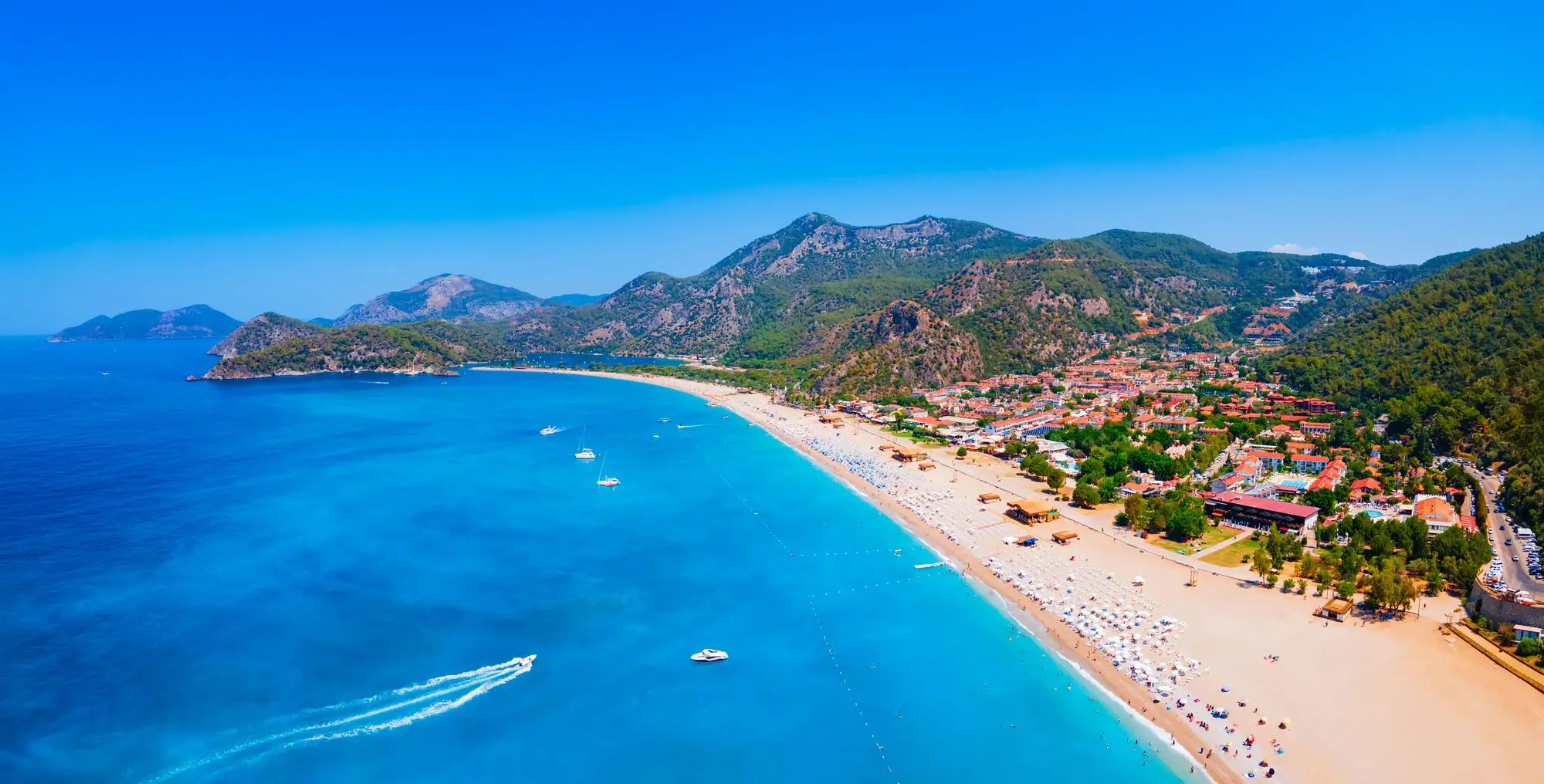
Swimming in turquoise waters relaxing by the sea or simply absorbing the slower rhythm of coastal life
Dinner and overnight are at the hotel
Offering a calm restorative close to a day that bridges empire history and the natural beauty of Türkiyes Aegean coast
Day 4 Monday Bodrum stone sea and hidden histories
Bodrum From the Depths of the Sea to the Silence of the Land**
The day begins at the Theater of Halicarnassus where stone seats rise gently against the hillside
As the wind moves through the empty rows the historian evokes a time when this space echoed with performances public debate and civic identity
Here guests are introduced to Bodrum not as a resort town but as ancient Halicarnassus a city shaped by culture memory and maritime power
From the theater the journey continues toward the harbor where Bodrum Castle rises above the water
Within its walls lies one of the worlds most significant cultural institutions
The Museum of Underwater Archaeology, a true highlight of the experience
Guided by a maritime archaeology specialist guests enter a narrative shaped not by monuments but by the sea
Wood salt rope and metal become historical evidence
Shipwrecks recovered from the depths reveal stories of ancient trade routes violent storms religious belief and survival across centuries
Each gallery presents vessels frozen in time
Bronze Age cargo ships Byzantine trading boats medieval wrecks carrying amphorae glass weapons and personal objects
The specialist explains how these ships once connected civilizations across the Aegean and the Mediterranean
Turning the sea into a highway of exchange rather than a boundary
In rarely accessible conservation and research spaces guests learn how centuries underwater are slowly undone
Through patient scientific processes desalination reconstruction and documentation
Artifacts emerge piece by piece under human care
This behind the scenes perspective transforms archaeology into a living discipline where time science and responsibility intersect
What Is Hidden Inside the Bodrum Museum of Underwater Archaeology
What makes the Museum of Underwater Archaeology truly exceptional is not only what is displayed but what is usually unseen
Beneath the visible galleries lies one of the worlds most important collections of ancient shipwrecks
Recovered from the depths of the Aegean and Mediterranean seas
Each wreck preserved not as a single object but as a moment frozen in time
Ancient Shipwrecks as Time Capsules
Hidden within the museum are complete shipwreck assemblages
Bronze Age vessels from over 3300 years ago
Byzantine merchant ships
Medieval trading boats
These ships still carry their original cargo
Amphorae filled once with wine oil or grain
Glass ingots weapons tools personal belongings even food remains
They reveal how people traded traveled prayed and survived
The ships are not reconstructions in the theatrical sense
They are archaeological truths
Reassembled piece by piece exactly as they were found on the seabed
The Oldest Known Shipwrecks in the World
Among the most extraordinary hidden treasures is the Uluburun Shipwreck
One of the oldest known seafaring vessels ever discovered
Dating back to the Late Bronze Age
Its cargo contained copper and tin ingots jewelry seals ivory glass and luxury goods
Evidence of a global trade network connecting Anatolia Cyprus the Levant Egypt and the Aegean
This single ship changed how historians understand ancient globalization
Conservation Laboratories Behind the Scenes
What most visitors never see are the conservation and research areas
Here centuries underwater are slowly undone
Wood that survived thousands of years beneath the sea must be desalinated stabilized and preserved for decades
Rope leather and organic materials are treated with extreme patience
Sometimes a single artifact requires years of care before it can be displayed
These spaces reveal archaeology as a living scientific process
Not discovery alone but responsibility
Human Stories Hidden in Objects
Perhaps the most powerful hidden element is the human presence
A shoe a cup a tool a gaming piece
Objects that speak of sailors lives fears hopes and routines
These are not royal treasures
They belong to ordinary people who crossed dangerous waters
And never reached their destination
Why This Museum Is Unique
This museum does not celebrate conquest or monuments
It preserves fragility movement and connection
It shows that the sea was not a boundary
But a bridge
And that beneath the waves lie stories that belong to all civilizations
In the afternoon the tone shifts from maritime depth to rural stillness
Under the concept of Bodrum the Silent Village the group travels inland away from the coast
Olive trees replace masts low stone houses quiet courtyards and the slower rhythm of agricultural life comes into focus
The first visit is to a traditional farm and jam and olive oil producer
Here guests encounter an extraordinary collection of preserves made from nearly every fruit and vegetable imaginable
Produced using ancestral methods and cooked slowly over stone fires
Alongside this olive oil is pressed by hand before their eyes using old techniques that preserve aroma and purity As guests enjoy a lunch of regional dishes
Olive oil based mezes and the finest flavors of Aegean Greek and Anatolian cuisine
The freshly produced olive oils are bottled and labeled individually with each guests name
A personal keepsake linking taste place and memory
The journey continues to a traditional village weaving workshop
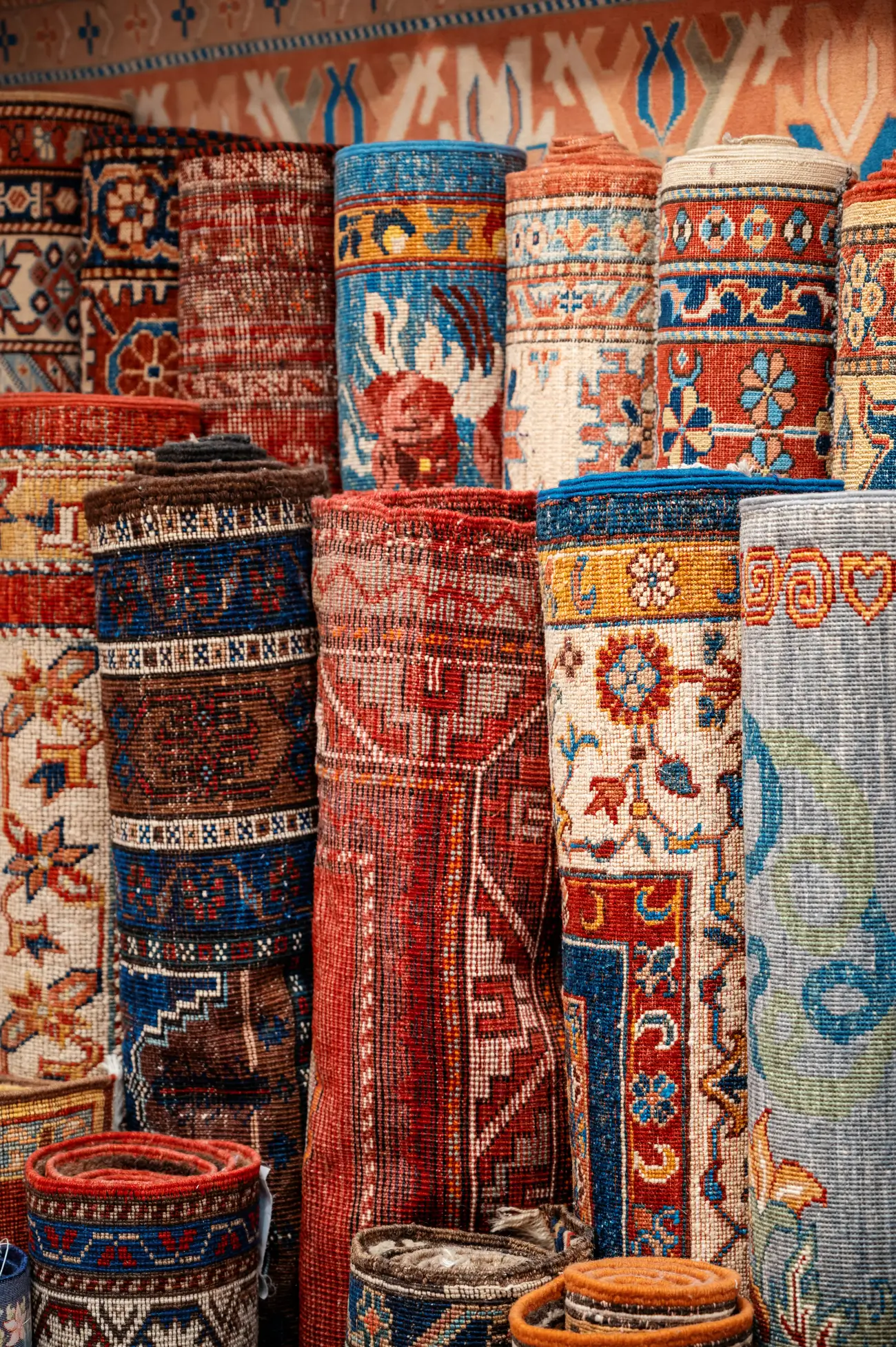
Where young women work together producing colorful Aegean carpets
Their labor supports not only craftsmanship but independence as many save toward future marriage and education
Guests are invited to sit beside them
Learning basic weaving techniques and sharing a brief moment of creation
Turning observation into participation and respect
As the sun begins to set the experience reaches its final chapter at Karnas Vineyard, one of Türkiyes most renowned estates
Surrounded by rolling vineyards guests walk among the vines as daylight softens
Wine tasting follows paired with an explanation of Anatolian terroir
Soil climate tradition and innovation
Dinner is served at Karnas Château
Prepared by a celebrated chef whose cuisine complements the wines
As the valley darkens conversation slows and the day concludes in harmony with the land
Guests return to their hotel for overnight in Bodrum
Carrying with them a day that moved seamlessly
From the depths of the sea
To the silence of the village
And into the richness of Anatolian soil
Day 5 Tuesday Aegean sanctuaries Bodrum to Izmir region
From Bodrum to Didim and the Ancient Roots of İzmir**
The day begins with a morning departure from Bodrum heading north along the Aegean coast
The landscape gradually opens into wide plains olive groves and quiet villages offering a gentle transition from coastal resort life to the deeper historical layers of western Anatolia
The first major stop is Didim, home to the monumental Temple of Apollo
One of the largest sacred temples of the ancient world
Here the lecturer introduces Didyma not simply as a religious site but as a powerful oracle center
Comparable in influence to Delphi
Pilgrims once traveled from across the Mediterranean seeking prophecy healing and guidance
As guests walk among the towering columns the story of Apollo unfolds
A god of light reason and foresight
The unfinished scale of the temple becomes part of the narrative reflecting ambition devotion and the interruption of history
The visit emphasizes how belief architecture and geography were inseparable in the ancient world. Lunch will be served in a Local restaurant in Didim
After the visit the journey continues north toward İzmir, ancient Smyrna
Upon arrival the focus shifts to the city’s layered civilization
İzmir is introduced as one of the oldest continuously inhabited cities in the Mediterranean
Its roots stretch back over five thousand years
From early Anatolian settlements to Ionian Greeks Roman administrators Byzantine Christians and later Ottoman rulers
Each civilization left its imprint shaping İzmir as a crossroads of cultures trade and ideas
The lecturer explains how Smyrna became a key Ionian city
A hub of maritime trade philosophy and early urban planning
Later under Roman rule it flourished with theaters agoras and public infrastructure
In Byzantine times it retained strategic importance
And during the Ottoman era evolved into a cosmopolitan port where Muslims Christians Jews and Levantines lived side by side
This layered identity sets the intellectual tone for the evening
Dinner and overnight are at your hotel in Izmir
Overlooking the Aegean Sea
Guests enjoy a relaxed evening meal at the hotel
Allowing time to rest reflect and prepare for the following day
Day 6 Wednesda From Shared Hands in Alaçatı to Imperial Stones in Ephesus
Community Experience Alternative-1
Foraging Culture and Women of Alaçatı**
The Alaçatı region is one of the richest areas in Türkiye for endemic edible plants
Its fertile landscape produces an extraordinary variety of wild greens including arapsaçı şevketi bostan radika labada ebegümeci dalgan deniz börülcesi wild asparagus turp otu mustard greens rocket watercress and cibes
This botanical diversity has shaped local cuisine daily life and seasonal rhythms for generations
Alaçatı itself is known not only for its island like beauty and stone architecture but also as a gathering point for both local and international high end travelers drawn by its authenticity style and culinary depth
At the heart of this experience are the women of Alaçatı
Women who forage these plants by hand in surrounding fields and hills and who contribute directly to their household economy
Every Wednesday a village produce market is set up where these women sell what they have collected and prepared
This market is not a performance or a staged event but a living part of weekly community life
As part of our community focused journey guests are introduced to this world from the very first day
Each guest receives a carefully prepared booklet describing the wild greens their local names nutritional benefits and traditional ways of cooking and preserving them
The booklet also includes phonetic guidance for pronunciation
From Day-1 Friday to Wednesday during transfers and shared moments the group practices these plant names together in a lighthearted playful way led by our CEO
This becomes a shared ritual turning language into connection and curiosity into confidence
During this practices guests will also be introduced to a set of very simple Turkish sales phrases designed to help increase engagement and sales at the stalls
These phrases will be taught in a playful and relaxed way during transfers and shared moments
All expressions will also be provided in written form so guests can easily review and practice them
The phrases are intentionally short memorable and meaningful often carrying a double meaning in Turkish
One such example is the phrase
Turp ye tur gibi ol
Guests learn that turp means radish the name of the plant itself
At the same time in Turkish the word turp is also used metaphorically to describe someone who is strong energetic and healthy
So the phrase literally and playfully means
If you eat radish you will be strong and healthy like a radish
By learning these expressions guests are not only able to communicate more effectively with local shoppers
They also experience how language humor and food culture are deeply connected in daily Turkish life
This shared learning process turns selling into storytelling
Encouraging genuine interaction laughter and increased visibility for the women at each stallF
On Wednesday morning before the market officially opens guests are welcomed into the space
Each stall is run by women who not only sell the produce but are the very people who harvested it
In many villages across Türkiye daily life still follows a familiar pattern
While men often spend long hours in coffeehouses the wFFomen work the fields forage the land and sustain the household economy
This context is shared respectfully to help guests understand the social fabric behind the market
Guests are then invited to take part
They join the women at their stalls helping arrange produce learning how each plant is differentiated and presented
At each stall a small sign is placed clearly stating that the activity is designed to support the woman who owns the desk
The signage carries the National Geographic Signature logo reinforcing the purpose of the experience
This visible message ensures transparency and helps market visitors immediately understand that their purchase directly supports local women and their work
Throughout the morning the atmosphere naturally evolves into a friendly and joyful competition
Guests encourage customers engage in conversation and apply what they have learned both about the plants and the language
Laughter curiosity and collaboration replace formality creating a market experience that feels alive generous and shared
At the end of the market day the experience concludes with a lighthearted celebration
As the activity follows a friendly competition format the guest whose stall achieves the highest sales is acknowledged
A symbolic prize is presented not as a measure of winning but as a celebration of participation effort and connection
The experience lasts approximately half a day and its purpose is clear and intentional
To support local women economically and visibly
To build awareness around Türkiyes rich heritage of medicinal and endemic plants
And to deliver this knowledge through joy play and human connection rather than observation alone
By transforming learning into a shared game and commerce into collaboration this experience reflects the core values of National Geographic Signature
Respect curiosity cultural preservation and meaningful impact
Using the few Turkish words they have practiced guests engage with customers encourage conversation and support sales in a natural sincere way
For local shoppers especially those with the means to choose where they spend their money this effort is met with genuine appreciation
Seeing international guests standing beside village women advocating their work creates a powerful moment of mutual respect
Each stall becomes not just a place of trade but a visible statement of support for women sustaining local culture and economy
This experience is not about observation but participation
Not about consumption but contribution
A shared morning where knowledge labor language and dignity meet in the most human way
Lunch will be served in the open market (traditional gözleme cooked by other stalls )
Alternative-2
Community Experience Efesium Selcuk
Tucked into the everyday life of Selcuk just beyond the monumental stones of Ephesus lies a quieter story one shaped not by emperors or temples but by hands memory and community
As the group enters Efesium they step into a space created by the Selcuk Municipality to support local women artisans and preserve traditional skills that might otherwise fade in the shadow of mass tourism
Shelves and tables are filled with handmade textiles scarves bags jewelry and small crafted objects each produced locally using techniques passed down through generations
A local host introduces the project explaining how Efesium was founded as a social initiative rather than a commercial shop
The goal is simple but powerful to create sustainable income for women in the region while keeping traditional craftsmanship alive within daily life
As guests browse and shop they are not purchasing anonymous souvenirs
Each item represents hours of handwork and a direct contribution to a household and a neighborhood
Income from sales supports women who balance craft with family responsibilities offering financial independence dignity and long term stability
The experience becomes a moment of exchange rather than transaction
Questions are asked stories are shared and the distance between visitor and community narrows
Guests gain insight into how cultural heritage survives not only in archaeological sites but in living hands and contemporary lives
By choosing to shop here the group actively supports
local women producers
community based economic development
the preservation of regional craft traditions
and a tourism model rooted in respect and reciprocity
Leaving Efesium guests carry more than objects with them
They carry a tangible connection to Selcuk and the knowledge that their presence has contributed directly to the well being of the community they have visited
FOR ALTERNATIF -1
Late morning the group departs Alaçatı/ Çeşme and travels inland toward Ephesus
One of the most significant archaeological cities of the classical world
Upon arrival the visit unfolds with a Specialis Lecturer guided exploration of the ancient city . Ephesus is presented not as ruins alone but as a living urban organism
Once home to over two hundred thousand people
A major port city linking Anatolia to the wider Roman world
Walking through the marble streets guests encounter
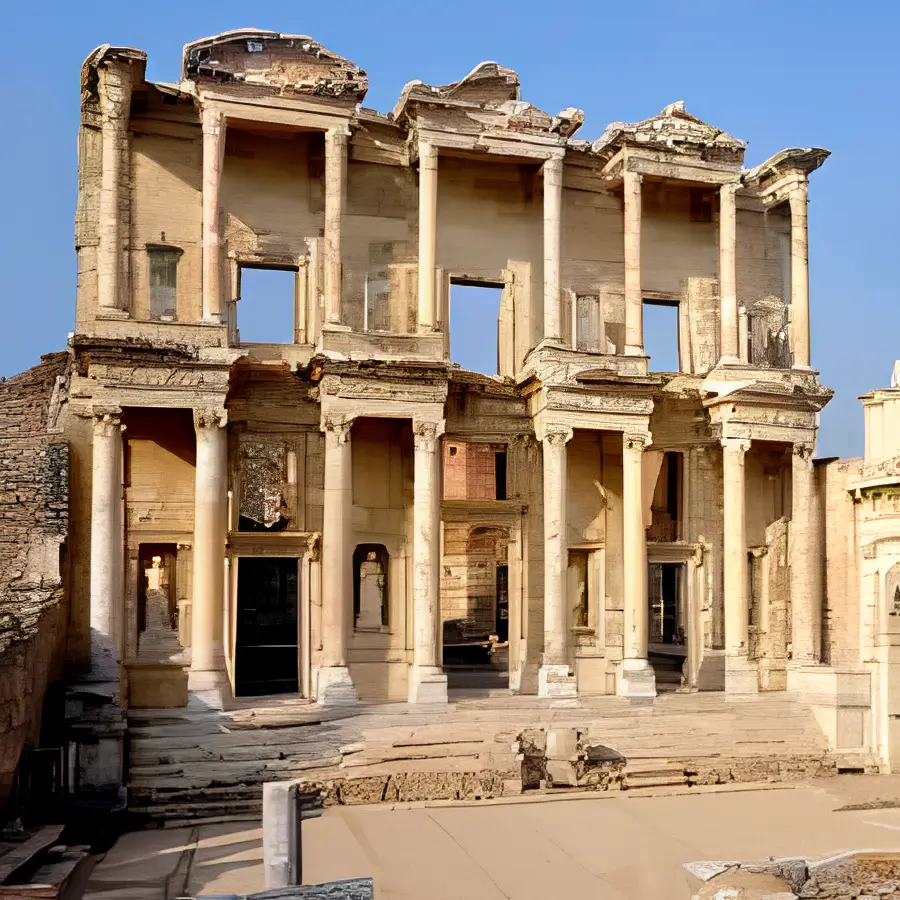
The Library of Celsus
The Great Theater
Public baths temples and civic spaces
The lecturer explains daily life governance commerce and belief
Emphasizing how Roman urban design shaped social order and identity
As evening approaches the experience reaches its peak with a private VIP dinner in the Ephesus area
Hosted in an exclusive historical or natural setting
The evening is accompanied by live classical music
Creating an atmosphere that echoes the cultural refinement of the ancient world
FOR ALTERNATİVE -2
Morning Departure from your hotel in İzmir to Selçuk/Ephesus.
The group arrives in Selcuk a town where layers of belief and settlement overlap within a compact landscape
Accompanied by a specialist guide and historian the day begins with an introduction to the region as a spiritual crossroads shaped by pagan Christian and imperial traditions
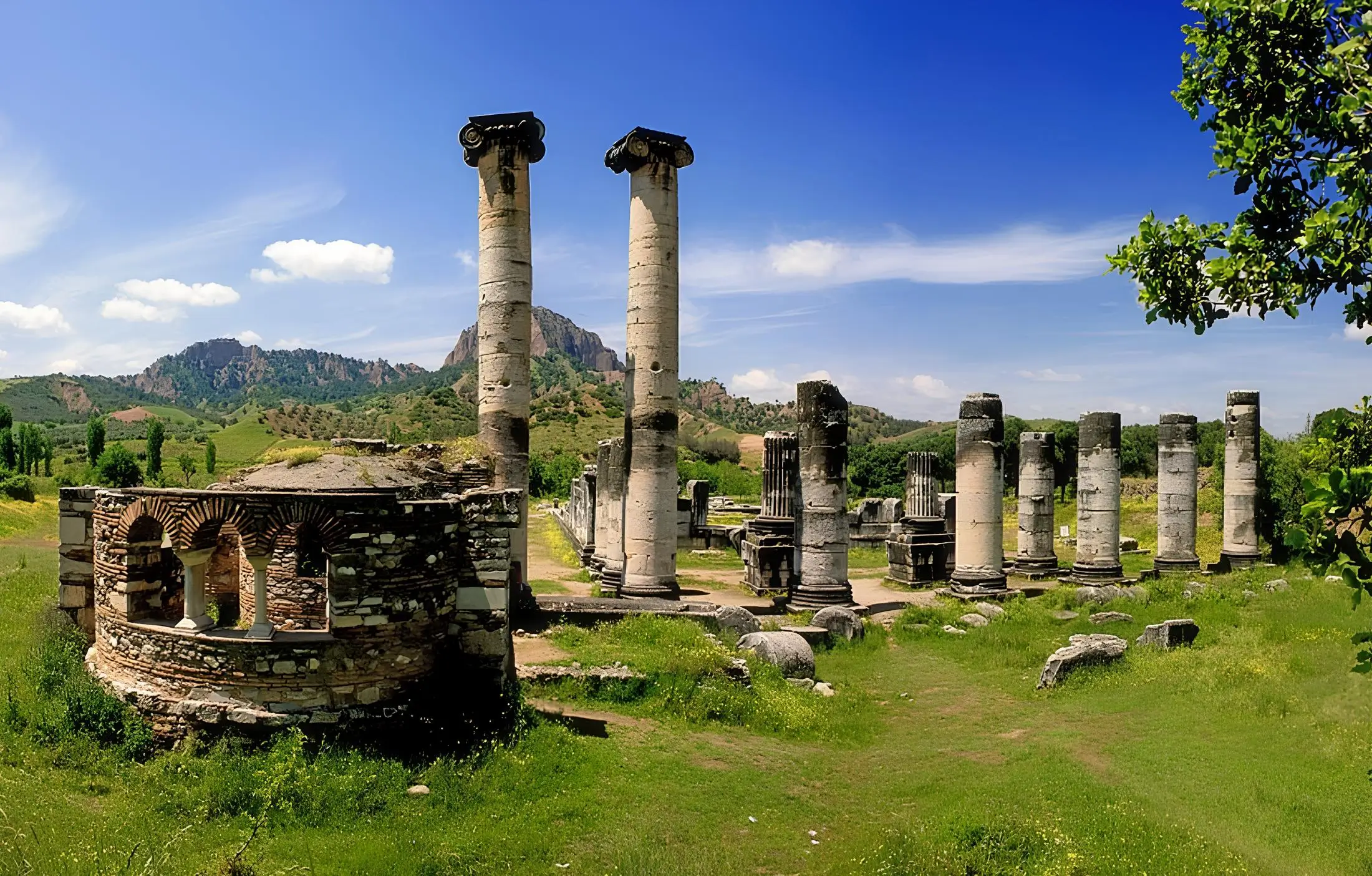
The first visit is to the Temple of Artemis once one of the Seven Wonders of the Ancient World
Standing among the remaining columns the lecturer reconstructs the scale symbolism and significance of the sanctuary
Artemis here was not only a goddess but a protector of fertility nature and civic identity
Pilgrims once arrived from across the Mediterranean bringing offerings trade and ideas
The historian explains how the temple functioned as both a religious center and an economic engine for the ancient city
The journey continues to the site of the Seven Sleepers a place woven into both Christian and Islamic tradition
In the quiet hillside setting the story of faith perseverance and miracle is shared
The expert describes how this narrative traveled across cultures becoming a rare shared legend between religions
The site offers a moment of reflection away from crowds where belief is understood as story and continuity rather than monument
Next the group visits the Basilica of St John built on the believed burial site of the apostle
From the elevated hilltop the landscape of Selcuk and the former harbor of Ephesus stretches outward
The historian explains the early Christian period and how Ephesus transformed into a major center of pilgrimage
Walking through the basilica ruins guests learn how sacred architecture evolved from Roman forms into Christian expressions
The conversation expands to include the Council of Ephesus and the city’s role in shaping early Christian doctrine.
Here we will have lunch in Efesiıum where the cooking class students prepare the meal (which also covers community oriented ) than ALTERNATIVE 2 community service take place
In the afternoon the group enters Ephesus itself one of the best preserved classical cities of the Mediterranean world
Moving slowly through marble streets accompanied by expert interpretation the city reveals itself as a living organism
The guide explains how water management commerce religion and entertainment shaped daily life
The Library of Celsus stands as a monument to knowledge reputation and memory
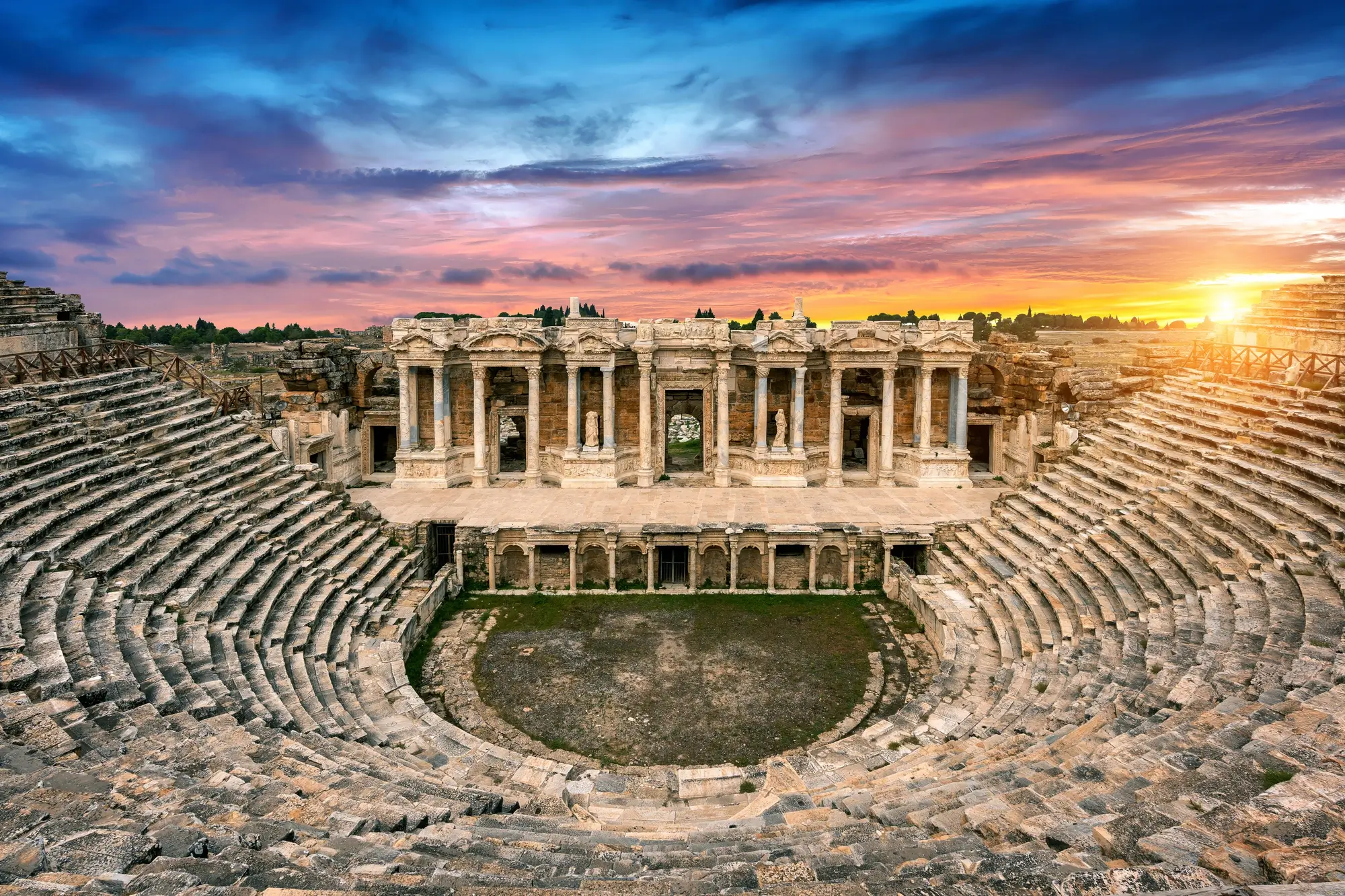
The Great Theater opens toward the former harbor illustrating the scale and ambition of Roman urban design
Terrace houses offer insight into private life with traces of color art and belief still visible on the walls
As the visit concludes the historian reflects on Ephesus as a city shaped by constant change
From sacred sanctuary to imperial capital to buried ruin and rediscovered past
The day ends with a deeper understanding of how belief power and daily life intersected in this extraordinary landscape.
Day- 7 From İzmir to Ankara The Intellectual Foundations of the Republic and the Archaeology of Anatolia
The day begins with a morning flight from İzmir to Ankara. Upon arrival, the program opens with a visit to Anıtkabir, the Mausoleum of Mustafa Kemal Atatürk, approached not only as a commemorative site but as a spatial and ideological statement of the modern Turkish Republic. The architectural axis, reliefs, and symbolic elements of the complex are understood as expressions of nation-building, collective memory, and political philosophy. Time is taken to reflect on Atatürk’s reforms and their enduring impact on the social, cultural, and institutional transformation of Türkiye.
The focus then shifts from the modern era to deep antiquity with an extended visit to the Museum of Anatolian Civilizations, one of the most significant archaeological institutions dedicated to the study of Anatolia. Situated in the historic Ulus district near Ankara Castle and housed within restored Ottoman commercial buildings, the museum itself embodies the continuity of urban life in the region.
The galleries present a systematic, chronological framework that traces human occupation in Anatolia from the Paleolithic period through the Iron Age and beyond. Early sections explore Neolithic settlement patterns and symbolic systems, with key material from sites such as Çatalhöyük illustrating the emergence of sedentary life, ritual practice, and early social complexity. The narrative then advances to the Bronze Age, where particular emphasis is placed on the Hittite state, whose political organization, legal traditions, and diplomatic practices represent a formative moment in the history of imperial governance. Cuneiform tablets, royal seals, and monumental reliefs are examined as primary sources for understanding administration, religion, and interstate relations in the ancient Near East.
Subsequent galleries address the Phrygian, Urartian, and Lydian cultures, highlighting regional diversity within Anatolia and the technological and artistic innovations that accompanied it. The museum’s curatorial approach emphasizes interaction rather than isolation, positioning Anatolia as a dynamic zone of cultural transmission between the Aegean, Mesopotamia, and the Iranian plateau. Throughout the visit, attention is drawn to long-term processes such as continuity and rupture, adaptation to landscape, and the evolution of belief systems.
By the conclusion of the day, Ankara emerges not merely as a political capital, but as an intellectual gateway to Anatolia’s deep past, where archaeological evidence and modern historical consciousness intersect. This layered understanding provides an essential scholarly foundation for the sites and landscapes encountered in the following stages of the journey.
Evening we depart from our hotel for a Private Dinner at a Historic Mansion in the Ankara Castle District Hosted by the Ministry of Tourism
We propose an exclusive private dinner hosted at a carefully selected historic Ottoman mansion located within the Ankara Castle district, one of the city’s most atmospheric and historically resonant quarters. This evening is conceived as a cultural and diplomatic gathering, hosted by a senior representative of the Ministry of Tourism, and designed specifically for National Geographic Signature guests.
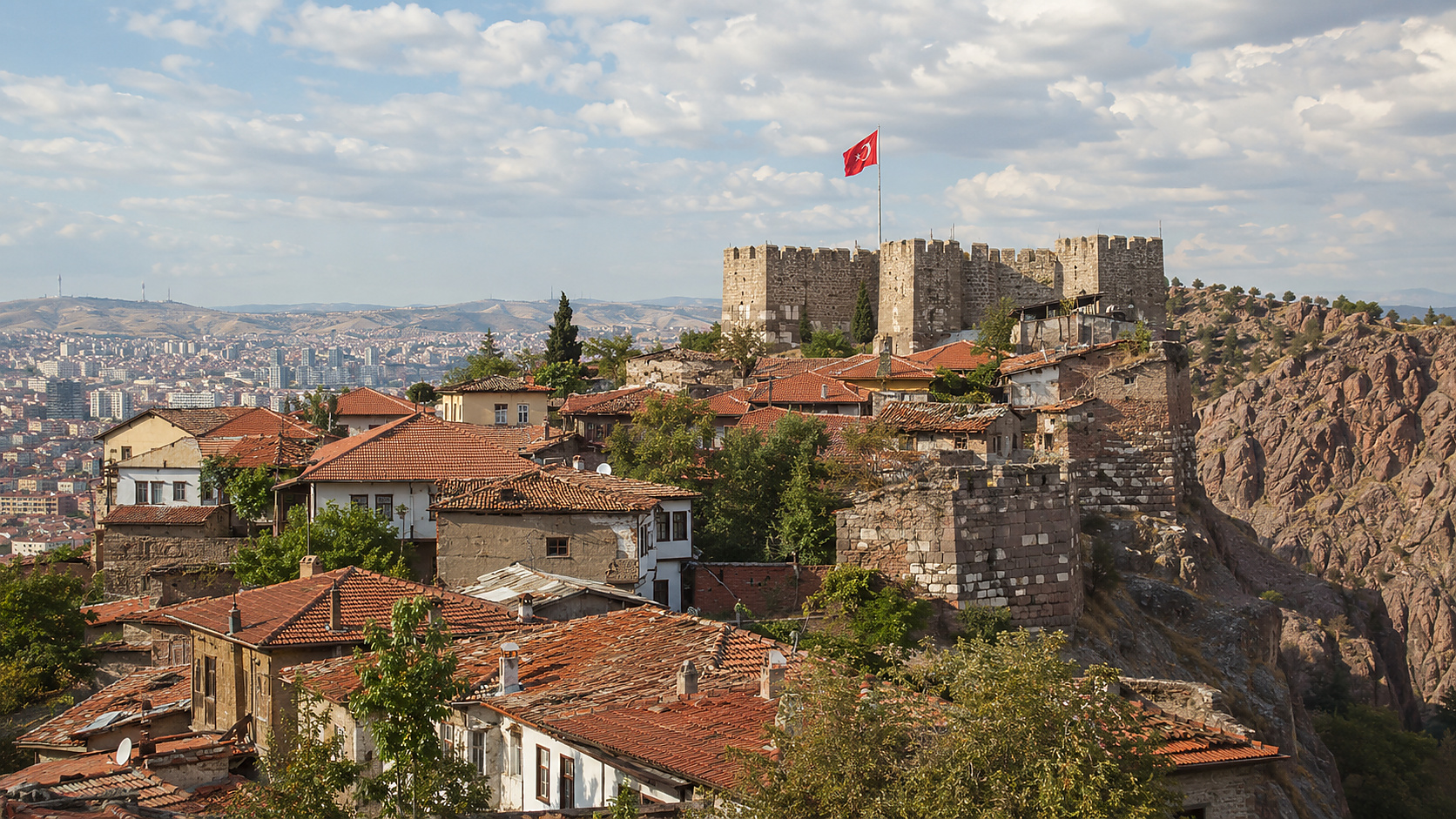
The Ankara Castle district represents the oldest continuously inhabited area of the city, with layers of Roman, Byzantine, Seljuk, and Ottoman history. Nestled within its narrow stone streets are a small number of restored Ottoman-era houses and mansions, privately owned or operated as boutique venues. These properties retain their original architectural character while discreetly accommodating refined private events.
The selected mansion features traditional Ottoman architecture, including stone and timber construction, inner courtyards, and elevated terraces offering views over historic Ankara. The setting provides a sense of authentic domestic history, rather than monumental grandeur, making it ideal for intimate, high-level gatherings.
Guests arrive in the early evening and are welcomed into the mansion’s courtyard or terrace for a quiet reception. The atmosphere is warm and understated, enhanced by soft lighting and the natural textures of the historic structure. The presence of the Ministry of Tourism host lends the evening a formal yet personal dimension, underscoring the cultural importance of Ankara within Türkiye’s national narrative. Dinner is served as a seated private event, either in the courtyard, terrace, or a restored interior hall, depending on season and weather. The menu is inspired by Anatolian and Ottoman culinary traditions, presented with contemporary refinement. Emphasis is placed on regional ingredients, balanced flavors, and elegant presentation rather than theatrical service.
The pacing of the evening is deliberately unhurried, allowing space for conversation and exchange. Wines and beverages are carefully selected to complement the menu and maintain a dignified, international tone.
This private dinner is designed to be:
Diplomatic rather than ceremonial
Intellectually engaging rather than performative
Elegant, intimate, and culturally grounded
There is no staged entertainment. The focus remains on place, conversation, and shared cultural context, aligning closely with National Geographic’s values of authenticity, storytelling, and depth.
Day 8 Day 1 – From Ankara to Cappadocia via Hattuşa: Landscapes of Power and Time
The journey begins early in the morning with departure from Ankara around 06:30–07:00, allowing the group to travel across the Central Anatolian plateau during the soft morning light. As the landscape opens into wide horizons, the guide introduces the Hittite civilization, one of the earliest imperial powers of the ancient world, whose authority was expressed through architecture, monumental gates, and a carefully chosen relationship between city and terrain.
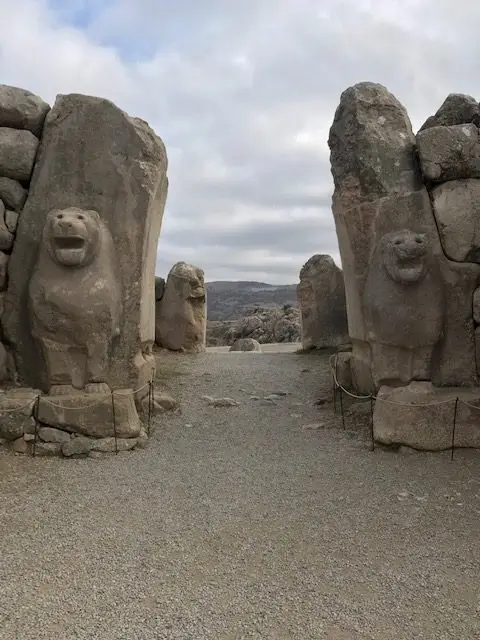
Arrival at Hattuşa, a UNESCO World Heritage Site, is scheduled for approximately 10:30, when the site is still relatively quiet and visually unobstructed. The visit focuses on how the Hittites used scale, stone, and topography to project power. The Lion Gate and King’s Gate are explored not only as historical structures but as visual compositions, carved directly into the landscape. Attention is given to framing, sightlines, and how light interacts with stone reliefs across the day.
The route continues through the Great Temple complex, where open spaces and remaining walls allow for wide-angle perspectives and detail studies. Selected areas of the Upper City provide elevated viewpoints, offering panoramic compositions that reveal the vast footprint of the former capital and its integration with surrounding hills. Movement through the site is unhurried, allowing time for observation, composition, and interpretation rather than continuous walking.
Departure from Hattuşa around 12:30 leads into the afternoon drive toward Cappadocia. Lunch is taken en route. As the landscape transitions, commentary shifts toward geological time, erosion, and the gradual transformation from fortified imperial terrain to the volcanic forms ahead. Arrival in Cappadocia is expected around 17:00, Upon arrival while our luggages will be sent to your hotel we will transfer to the 4×4 vehicles for gentle, non-adventurous jeep drive, through the fairy chimney valleys at sunset , focusing purely on scenery and photography, with no adventurous driving involved.” allowing guests to enjoy the landscape .
Check-in to your hotel and dinner at the hotel .
Day 2 – Cappadocia: Göreme Valley and Derinkuyu Underground City
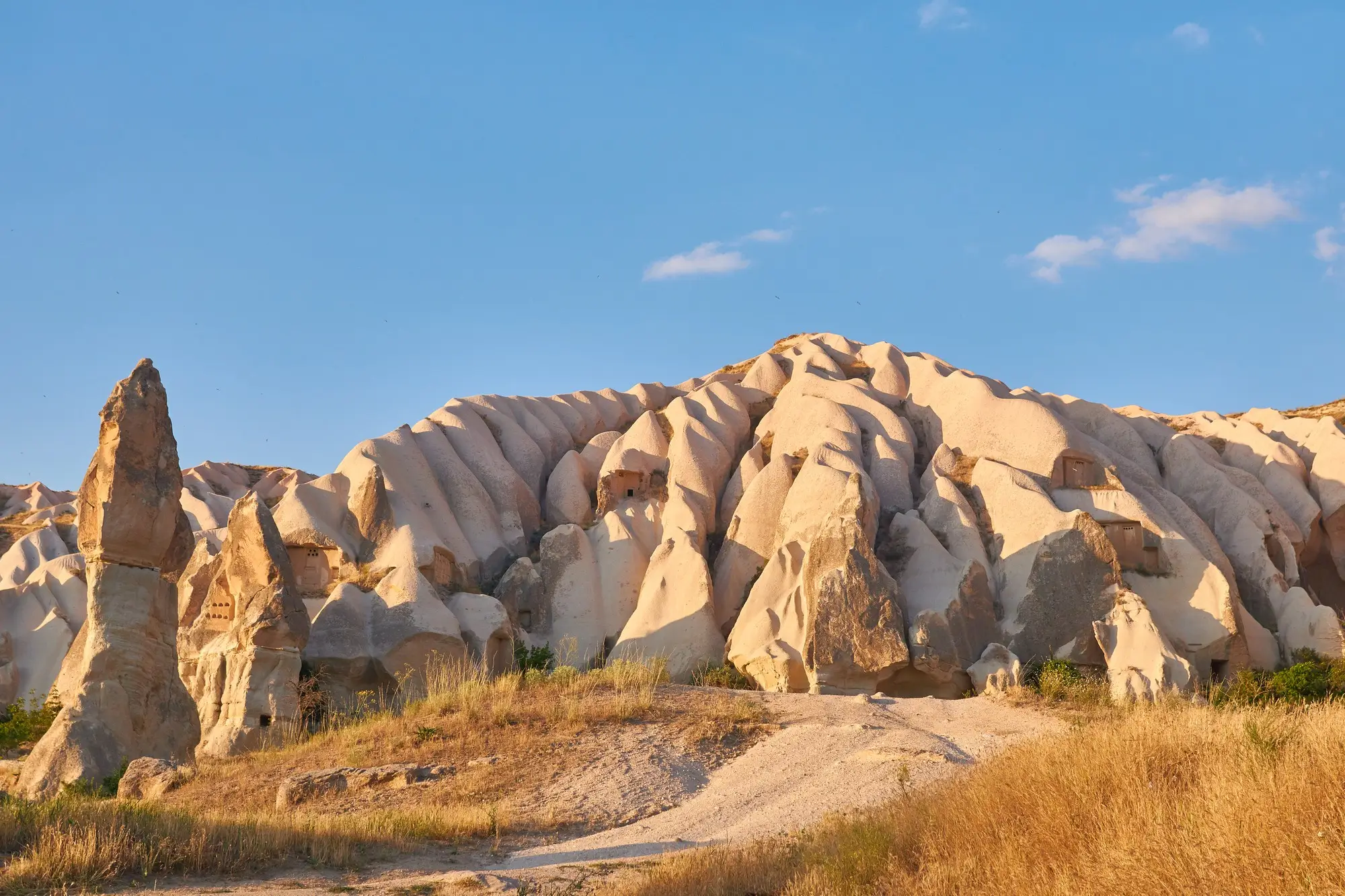
The day begins in Göreme Valley, where early morning light enhances the textures of Cappadocia’s volcanic formations. The soft tuff rock, fairy chimneys, and carved façades create a layered visual environment shaped equally by nature and human intervention. The visit emphasizes slow movement through the valley, encouraging attention to scale, shadow, repetition, and contrast. Rock-cut churches and dwellings are approached +life into the landscape itself.
The journey then continues to Derinkuyu Underground City, a striking contrast to the openness of Göreme. Descending below ground, the focus shifts to spatial compression, darkness, and engineered light. Narrow passages, ventilation shafts, and carved chambers offer a powerful study in human adaptation and survival, where architecture is shaped entirely by function and necessity. Time is given to observe the play of light and shadow, the rhythm of carved stone, and the sense of depth and enclosure.
After lunch at a local restaurant, the afternoon remains flexible. Depending on creative interest, time may be dedicated to additional landscape observation, artisan workshops, or quiet exploration of lesser-visited areas, allowing space for unscripted visual discovery.
In the evening, a carefully selected dinner setting provides a contemplative close to the journey with entertainment
We have 3 alternatives for you to choose
1.- Revithia Restaurant Kayakapi Cappadocia
Revithia is not simply a restaurant but a carefully articulated encounter with Cappadocia through taste space and memory
Set within the historic cave neighborhood of Kayakapi the restaurant occupies a restored stone and cave structure carved directly into the volcanic rock a setting shaped as much by geology as by human intention
Guests approach through narrow paths of the old settlement where the scent of stone and earth lingers in the air and light softens against rough walls
Inside the temperature cools naturally and the architecture embraces silence thick stone curves low ceilings and intimate rooms that feel discovered rather than designed
The dining room is restrained and contemplative
Candlelike light moves gently across stone surfaces highlighting textures formed millions of years before the first human settlement
Tables are spaced to allow conversation and reflection and the atmosphere invites attention rather than distraction
The culinary philosophy at Revithia is rooted in Anatolia and Cappadocia specifically drawing from regional recipes that once belonged to village kitchens seasonal cycles and family memory
Many of these dishes have nearly disappeared from everyday life and are reintroduced here through careful research technique and respect rather than nostalgia
The chef presents a tasting menu format allowing the meal to unfold as a narrative rather than a selection
Each course is introduced personally explaining the origin of the ingredients the historical reference behind the dish and the way traditional methods have been interpreted through contemporary culinary practice
Ingredients are locally sourced whenever possible reflecting the agricultural rhythms of Central Anatolia grains legumes herbs dairy and vegetables shaped by altitude climate and soil
Flavors are layered restrained and precise allowing the land itself to remain the primary voice
Wine pairings accompany the menu with particular attention to Cappadocian vineyards and Anatolian terroir
Guests are guided through the selections with insight into volcanic soil grape varietals and the long history of winemaking in the region dating back to antiquity
Service is quiet deliberate and knowledgeable
There is no theatrical presentation no background entertainment no interruption of the experience
The focus remains on dialogue between guest food place and story
Revithia aligns naturally with National Geographic Signature values
It emphasizes authenticity over spectacle
Research over reinvention
Connection over display
Dining here becomes a final reflection on the journey through Anatolia
A moment where geology history agriculture and human creativity converge in a single space carved from the land itself
3. Farewell Dinner Sacred House Cappadocia
As evening descends over Cappadocia guests arrive at Sacred House a place that feels less like a venue and more like a threshold between time periods belief systems and inner worlds
Set within a meticulously restored historic cave mansion Sacred House is carved from volcanic stone yet shaped by centuries of spiritual symbolism ritual and human imagination
Passing through heavy doors the outside world recedes
Light is low deliberate and warm reflecting softly off stone arches columns and alcoves
The scent of candle wax stone and earth lingers in the air and silence carries weight rather than absence
Sacred House is inspired by the ancient spiritual traditions of Anatolia and the wider Mediterranean world
Its architecture and interiors draw from monastic spaces chapels and subterranean sanctuaries once used for contemplation healing and retreat
Every chamber is designed to slow movement quiet the senses and invite inward attention
The farewell dinner unfolds within one of the candlelit cave halls where stone walls curve naturally around the table creating a sense of enclosure and shared presence
There is no stage no performance no background distraction
The space itself becomes the experience
Dinner is presented as a carefully paced tasting menu rooted in Anatolian culinary heritage
Dishes draw inspiration from ancient ingredients grains legumes herbs olive oil and slow cooked preparations that once sustained monastic and village life
Each course is introduced with brief contextual insight connecting food to landscape tradition and the rhythms of Central Anatolia
Wine pairings are selected to complement the reflective nature of the evening with an emphasis on Anatolian vineyards and restrained balance rather than opulence
Service is intentional quiet and deeply respectful of the atmosphere allowing conversation and reflection to unfold naturally
Between courses moments of stillness emerge as candlelight flickers against stone and shadows move gently across the walls
The experience becomes less about dining and more about presence
A shared pause at the end of a long journey through civilizations landscapes and belief systems
As the evening concludes guests leave Sacred House slowly stepping back into the night carrying a sense of calm resonance
The farewell is not marked by ceremony but by quiet understanding
A final gathering shaped by stone fire memory and the enduring human search for meaning
Private Dinner at Güray Museum – Cappadocia (Avanos)
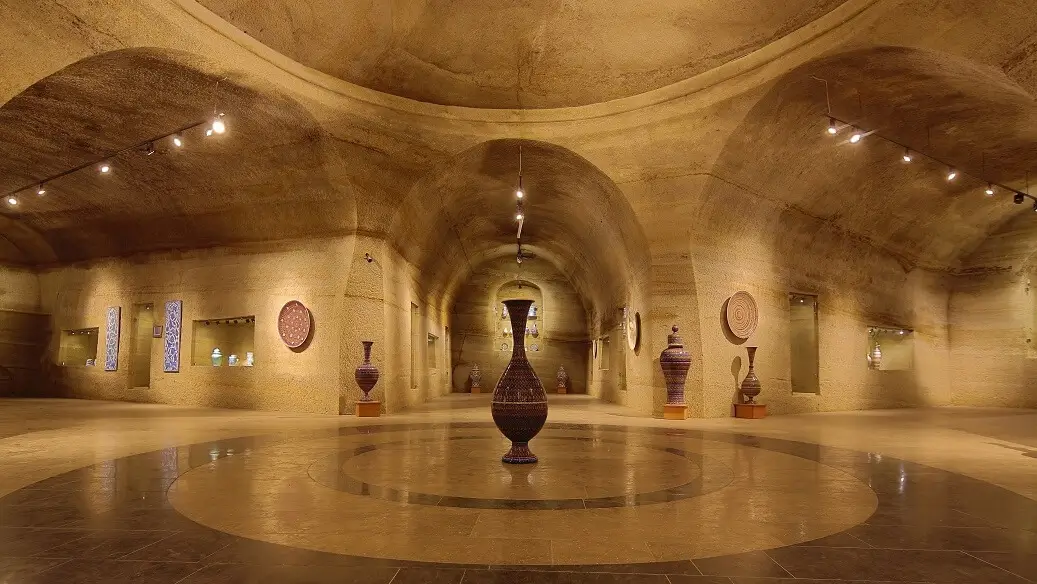
We propose an exclusive private dinner hosted at the Güray Museum, Cappadocia’s unique underground museum carved into the rock in Avanos. This evening is conceived as a cultural immersion rather than a conventional entertainment program, combining gastronomy, music, and movement within an architecturally and historically resonant setting.Descending below ground, guests enter a sequence of softly lit galleries where natural stone walls, vaulted forms, and controlled lighting create an intimate and contemplative environment. The underground architecture offers natural acoustics and a sense of enclosure that heightens focus and atmosphere, making it an exceptional setting for a private evening event. The museum’s contemporary design, rooted in Cappadocia’s subterranean heritage, provides a calm and elegant backdrop for dining and performance.
Arrival & Expert Briefing
Upon arrival, guests are welcomed into the underground galleries of the museum, where the atmosphere immediately shifts from the outside world into a calm, introspective space carved into the rock.
Before dinner, a private briefing by a senior museum expert or curator is arranged. This introduction provides insight into: the long ceramic tradition of Anatolia Avanos as a pottery center since the Hittite period the architectural concept of the museum and its underground design the relationship between material culture, landscape, and continuity
The briefing is conversational and informal, allowing guests to engage intellectually with the space they are about to inhabit for the evening.
Dinner Experience : The dinner is served as a seated private event, featuring a menu inspired by Anatolian cuisine, thoughtfully prepared and presented to complement the setting. The pacing of the meal is unhurried, allowing guests to engage with both the space and the cultural elements of the evening. Wine and beverage selections are curated to support the menu without overshadowing the experience.
Cultural Entertainment – Turkish Night (Curated & Refined) : The evening includes a carefully curated Turkish Night program, adapted specifically for an international, culturally curious audience. Rather than a loud or touristic show, the entertainment is presented in a measured, narrative-driven format, highlighting regional music and traditional dance forms from Anatolia.
Performances are interwoven naturally throughout the evening, allowing guests to experience the rhythm, costume, and musical heritage of Turkey in a way that feels authentic and respectful. The underground setting enhances the intimacy of the performances, drawing attention to movement, sound, and expression rather than spectacle.
What make the Güray Museum Is an Ideal Setting : as ın 2025 USTOA ACTIVE MEMBERS FAREWELL DINNER TOOK PLACE WITH ENTERTAINMENT THERE WHERE ı MYSELF JOINED
The underground architecture reflects Cappadocia’s historic relationship with the land. The museum context elevates the cultural program beyond entertainment
The setting allows for privacy, controlled sound, and visual intimacy It aligns well with National Geographic–style values of authenticity and cultural depth. Departure to the hotel for overnight .
Day 10 Sunday Cappadocia departure
Depart Cappadocia carrying the sensory memory of stone water wind and human ingenuity across millennia.